Struggling with European customs rejecting your CO2 cylinder shipments? Worried about the financial loss from non-compliant products? We have the solution to ensure smooth entry and distribution.
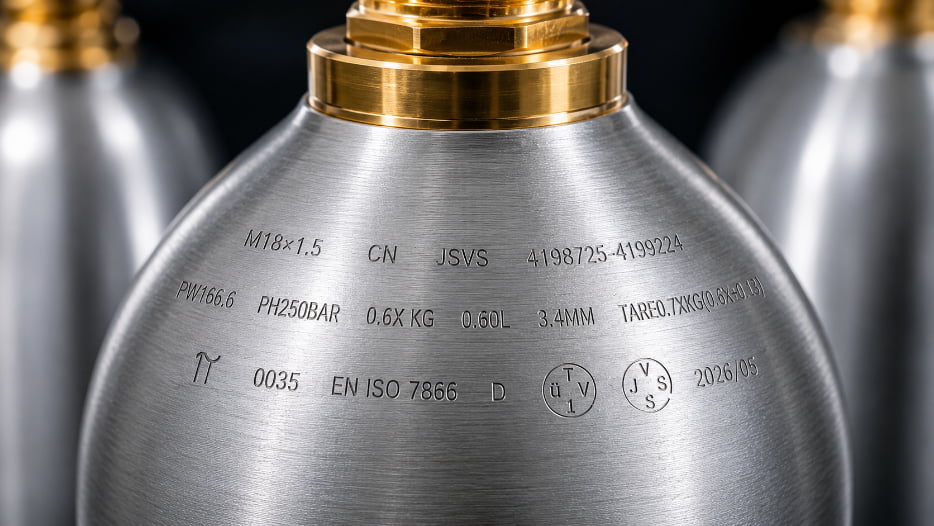
To wholesale CO2 cylinders in Europe, you must ensure they have TPED (Transportable Pressure Equipment Directive) certification1, often mistaken for CE2. This certification, proven by shoulder markings and official documents3, is essential for customs clearance and legal sale in the EU.
Getting your products into the European market can feel like a minefield of regulations. One small mistake with certifications, and your entire shipment could be sent back, costing you thousands. I remember a time when a new client came to us after their previous supplier's shipment was seized at the port. They were desperate. This experience highlights a critical point: understanding the specific compliance rules for Europe isn't just important, it's everything. Let's break down exactly what you need to look for to avoid these costly errors and ensure your business thrives.
What is the real certification required for CO2 cylinders in Europe, beyond a simple CE mark?
Confused by the different certifications for gas cylinders? Afraid of choosing a supplier whose products get rejected? Let's clarify the exact compliance you need for the EU market.
In Europe, CO2 gas cylinders require TPED certification, not just a standard CE mark. The TPED (Transportable Pressure Equipment Directive) specifically governs high-pressure cylinders4. This certification ensures safety and compliance for legal distribution across the EU, and it's what customs officials look for.
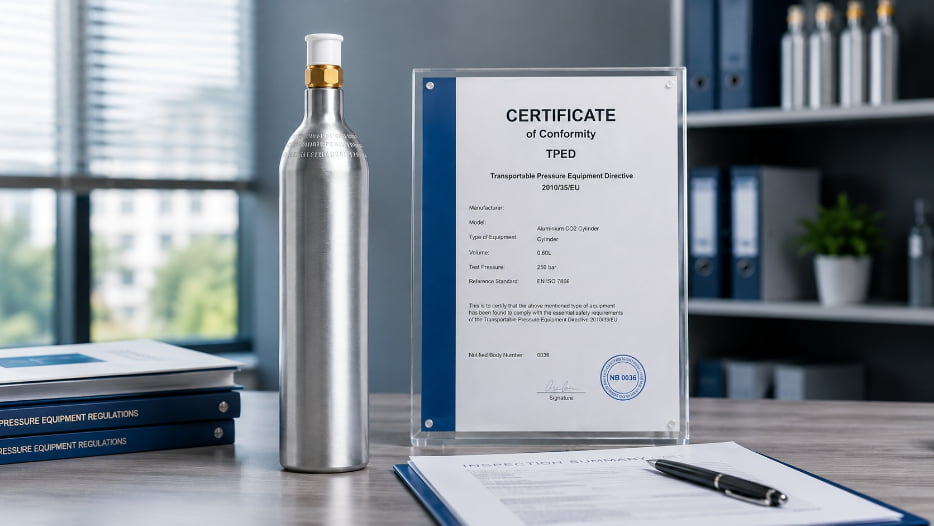
Many people new to the European market think a general CE mark is enough. But for transportable pressure equipment like CO2 cylinders, the rules are much stricter. The CE mark indicates conformity with health, safety, and environmental protection standards for products sold within the European Economic Area (EEA)5. However, the TPED is a specific piece of legislation that applies directly to items like gas cylinders. It ensures they are designed, manufactured, and tested to withstand high pressure safely during transport and use. Customs officials in Europe are trained to look for TPED compliance specifically. Without it, your shipment won't even leave the port. It's the first and most important hurdle to clear. A reliable manufacturer must provide you with both the physical proof on the cylinder and the official documentation to back it up.
How to Verify TPED Compliance
You must be able to verify this compliance yourself. Don't just take a supplier's word for it. There are clear indicators you should always check.
| Verification Method | Description | Why It's Important |
|---|---|---|
| Cylinder Shoulder Stamp | A "Pi" (π) mark is physically stamped on the cylinder's shoulder, followed by the number of the Notified Body that certified it.6 | This is the physical proof customs officials look for first. It's non-removable and permanent. |
| Certificate of Conformity7 | An official document issued by the Notified Body, stating that the cylinder model meets all TPED requirements. | This is your legal proof of compliance. You will need to present this paper to customs. |
| Inspection Summary (IS) Report | A detailed report that accompanies the shipment, outlining the tests and inspections performed on that specific batch of cylinders. | This document links the specific cylinders in your shipment to their TPED certification. |
How do you ensure your CO2 cylinders meet European consumer expectations and compatibility standards?
Worried your CO2 cylinders won't fit popular soda makers in Europe? Concerned about meeting consumer demands for eco-friendly products? We've got the insights you need for market success.
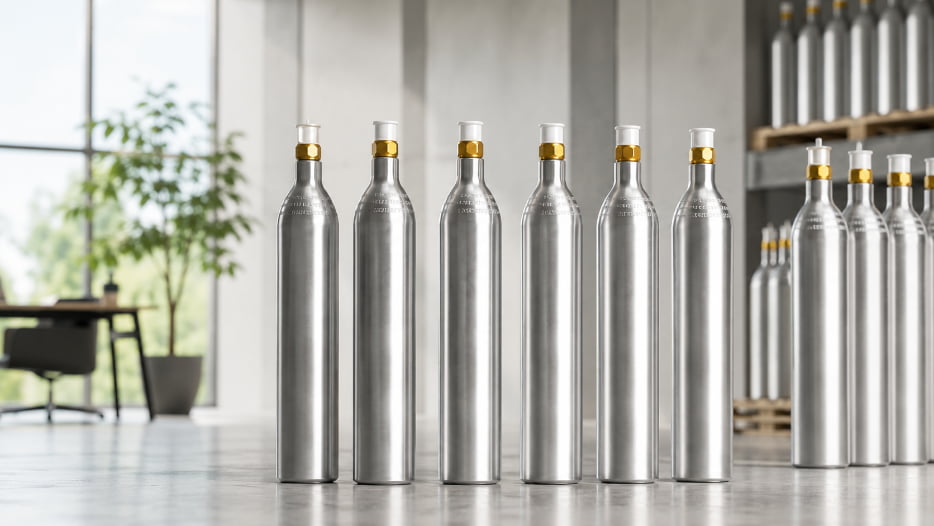
For wide acceptance in Europe, your CO2 cylinders must have the standard TR21-4 valve thread8. This ensures compatibility with major brands like Sodastream and Drinkmate9. Additionally, offering lightweight, recyclable aluminum cylinders appeals to the environmentally conscious European consumer base.
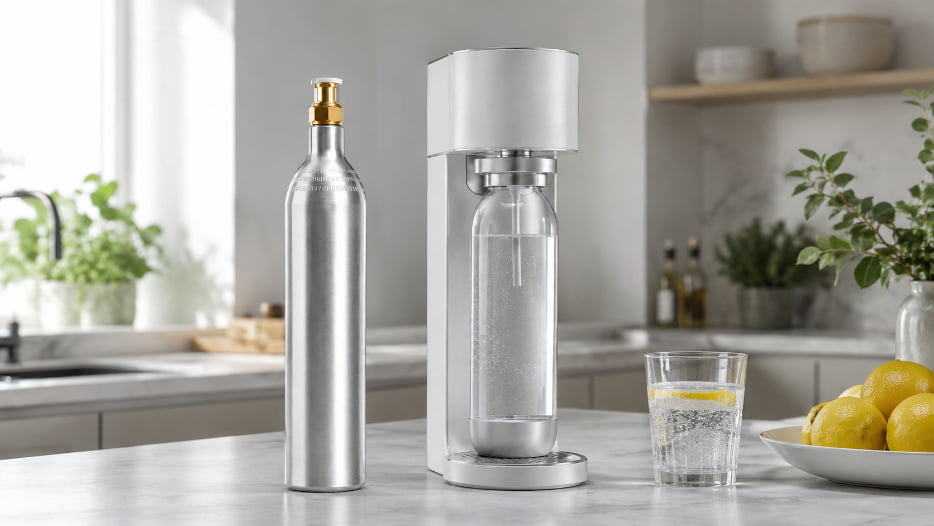
Compliance gets your product into the country, but compatibility gets it into the customer's home. The European market for soda makers is dominated by a few major brands, and they all use a specific valve standard. If your cylinders don't fit, they are useless to the end consumer. Beyond functionality, European buyers are very conscious of environmental impact10. They prefer products that are sustainable and lightweight. This is why aluminum cylinders are becoming increasingly popular11. They are not only lighter and easier to handle than traditional steel cylinders but are also highly recyclable. Offering an eco-friendly option can be a major selling point for your brand and can set you apart from competitors who only offer heavier, less sustainable alternatives. As a manufacturer, we've seen a clear shift in demand towards these lightweight and green products over the past few years.
The Universal TR21-4 Valve Standard
The TR21-4 valve is the unofficial standard across Europe. It's the connection used by Sodastream, Drinkmate, and almost all other European soda machine brands. Sourcing cylinders with any other valve type will severely limit your market and lead to customer complaints and returns. It's a simple detail, but getting it wrong can ruin your brand's reputation.
Meeting Consumer Preferences for Sustainability
European consumers actively look for products that align with their values. Sustainability is not just a buzzword; it's a key purchasing driver.
| Cylinder Type | Pro for EU Market | Con for EU Market |
|---|---|---|
| Aluminum | Lightweight, easy to handle. Highly recyclable, perceived as "eco-friendly". Resists corrosion. | Higher initial manufacturing cost. |
| Steel | Durable and robust. Lower manufacturing cost. | Heavier, less convenient for home use. Prone to rust if not maintained. |
By offering lightweight aluminum cylinders, you directly meet the demand for convenience and environmental responsibility, giving your product a significant competitive edge.
What are the critical packaging and shipping rules for CO2 cylinders to avoid customs seizure in Europe?
Are you anxious about your high-pressure gas cylinders being rejected by shipping lines or seized by customs? The strict rules for dangerous goods can be daunting. Here's how to navigate them safely.
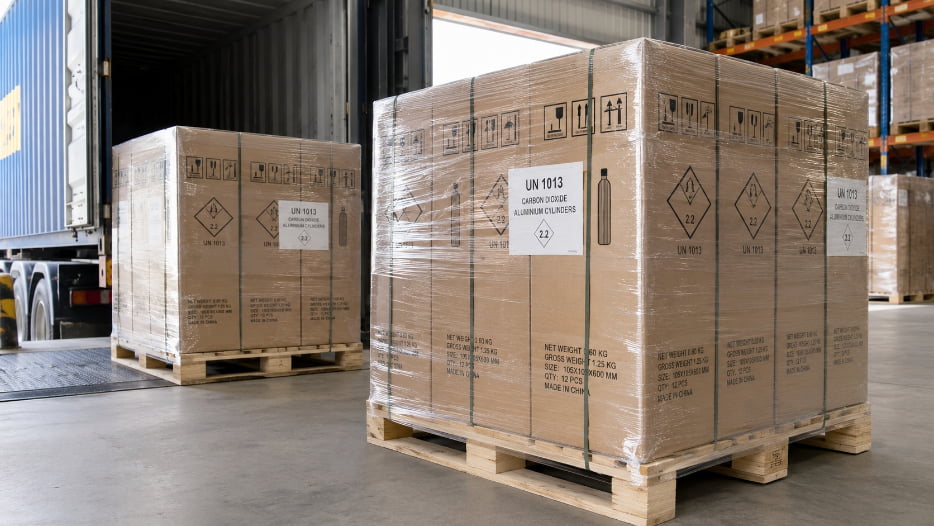
CO2 cylinders are classified as UN1013, Class 2.2 dangerous goods.12 To ship them legally, you must use UN-compliant packaging with proper reinforcement and clear labeling. This prevents shipping rejections and ensures your goods pass customs inspections without being detained.
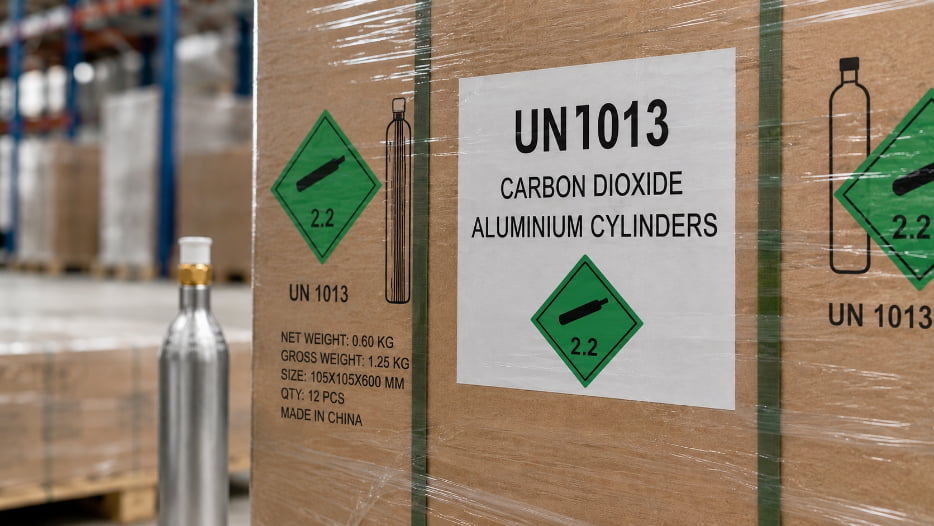
Shipping high-pressure gas cylinders internationally is a serious business. These products are classified as dangerous goods for a reason, and there is zero tolerance for cutting corners. I once helped a client whose shipment was held at the port for two months because their previous supplier used standard cardboard boxes without the correct markings. The shipping line refused to load it, and customs wouldn't clear it. It was a logistical nightmare that cost them a lot of time and money. Every step of the process, from the box you use to the labels you stick on it, is regulated. Working with a factory that understands these UN regulations is not a luxury; it's a necessity. We manage this process daily, ensuring every shipment is packed, reinforced, and documented perfectly to prevent these exact problems.
Navigating Dangerous Goods Regulations
The United Nations sets the standards for transporting dangerous goods to ensure safety. For CO2 cylinders, the key designation is UN1013, Carbon Dioxide, Class 2.2 (Non-flammable, non-toxic gas). All your shipping documents, packaging, and labels must reflect this classification. Failure to do so will result in immediate rejection by the carrier and customs.
Essential Packaging and Labeling Checklist
Your factory partner should handle this, but you need to know what to look for. Here is a basic checklist for a compliant shipment:
- UN-Rated Boxes: The outer packaging must be certified to carry the weight and nature of the goods.
- Proper Reinforcement: Cylinders must be secured within the box to prevent movement. This often involves internal dividers or supports.
- Clear Labeling: Each box must have the correct dangerous goods labels, including the UN number (UN1013) and the Class 2.2 hazard diamond.
- Correct Documentation: A Shipper's Declaration for Dangerous Goods must be accurately completed and accompany the shipment.
- Palletizing: For large shipments, pallets must be securely wrapped and stabilized, with labels visible on the outside.
Getting this right ensures a smooth journey from our factory to your warehouse.
Conclusion
Succeeding in the European CO2 cylinder market means prioritizing TPED compliance, consumer compatibility, and correct shipping procedures. Partnering with a knowledgeable manufacturer is your key to unlocking this market.
"[PDF] Transportable Pressure Equipment Directive 2010/35/EC", https://www.transport-community.org/wp-content/uploads/2021/06/02-European-Commission-DG-MOVE-Presentation-of-Directive-2010-35-EU-on-transportable-pressure-equipment.pdf. The EU Transportable Pressure Equipment Directive 2010/35/EU establishes conformity requirements for transportable pressure equipment used in the carriage of dangerous goods, including gas cylinders, supporting the need for TPED compliance in the European market. Evidence role: definition; source type: government. Supports: CO2 cylinders intended for wholesale distribution in Europe must comply with TPED requirements rather than relying only on a general product conformity mark.. Scope note: The directive establishes the legal framework; it does not by itself prove how every customs authority applies the rule in individual shipments. ↩
"CE Marking Transportable Pressure Equipment (T-PED) - CSI S.p.A.", https://www.csi-spa.com/en/eu-directives-and-regulations/transportable-pressure-equipment-t-ped-directive. European Commission guidance distinguishes CE marking for many EU product-safety directives from the Pi marking regime used for transportable pressure equipment under TPED, supporting the distinction between CE and TPED conformity marks. Evidence role: definition; source type: government. Supports: TPED certification for transportable pressure equipment is distinct from a standard CE mark.. Scope note: The source clarifies the regulatory distinction; it may not document how frequently market participants confuse the two markings. ↩
"TPED – Pi Marking", https://www.qvccert.com/product-certification/tped-pi-marking/. EU TPED provisions require conformity marking and documentation for transportable pressure equipment, including the Pi marking and identification of the notified body, supporting the statement that compliance is demonstrated through markings and official records. Evidence role: mechanism; source type: government. Supports: TPED compliance is demonstrated through permanent cylinder markings and accompanying official compliance documentation.. Scope note: The source supports the general compliance mechanism; shipment-specific document requirements can vary by transport mode and authority. ↩
"Directive 2010/35/EU of the European Parliament and of the Council", https://www.legislation.gov.uk/eudr/2010/35/data.xht?view=snippet&wrap=true. Directive 2010/35/EU covers transportable pressure equipment used for gases and other dangerous goods and applies to cylinders and similar pressure receptacles, supporting the claim that TPED is the specific EU framework for such cylinders. Evidence role: definition; source type: government. Supports: TPED is the EU regulatory framework that governs high-pressure transportable gas cylinders.. Scope note: The directive covers a broader category than CO2 cylinders alone, so the support is category-level rather than product-model-specific. ↩
"CE marking - Wikipedia", https://en.wikipedia.org/wiki/CE_marking. European Commission CE-marking guidance states that CE marking indicates a product’s conformity with applicable EU health, safety, and environmental protection legislation and allows free movement within the European Economic Area. Evidence role: definition; source type: government. Supports: The CE mark signifies conformity with applicable EU health, safety, and environmental requirements for covered products in the EEA.. Scope note: CE marking applies only to product categories covered by CE-marking legislation and is not a universal mark for all goods. ↩
"Typical markings for a permanent gas cylinder according to TPED", https://www.luxfercylinders.com/support-item/56-tped-permanent-gas-cylinder-markings/. EU TPED rules require the Pi marking for compliant transportable pressure equipment and require the identification number of the notified body involved in conformity assessment, supporting the described marking practice. Evidence role: mechanism; source type: government. Supports: Compliant TPED cylinders bear a Pi mark and notified-body identification number as evidence of conformity assessment.. Scope note: The regulation specifies marking requirements; the exact physical location on a cylinder may be governed by technical standards or industry practice. ↩
"Pressure Equipment - TPED 2010/35/EU & PED 2014/68/EU - Eurofins", https://www.eurofins.com/industrial/industries/pressure-equipment/. TPED conformity assessment procedures require documented evidence that transportable pressure equipment meets applicable requirements, supporting the role of conformity documentation in demonstrating compliance. Evidence role: mechanism; source type: government. Supports: Official conformity documentation is used to demonstrate that a cylinder model meets TPED requirements.. Scope note: Terminology and document format may differ by notified body, product family, or conformity-assessment module. ↩
"Amazon.com: CO2 Cylinder Adapter Female Thread TR21-4 to Male ...", https://www.amazon.com/Cylinder-Adapter-Replacement-SodaStream-Soda-Club/dp/B0948NBLC3. Technical standards and refillable CO2 cylinder specifications commonly identify TR21-4 as a valve-thread connection used for beverage carbonation cylinders, supporting the claim that this thread is a relevant compatibility specification. Evidence role: definition; source type: institution. Supports: TR21-4 is a standard valve-thread specification relevant to CO2 cylinders for beverage carbonation systems in Europe.. Scope note: The source may establish the thread specification and common use, but it may not prove universal compatibility with every soda-maker model or regional variant. ↩
"Deluxe Sodastream Cylinder Adapter (with pin adjustment) (EU ...", https://kegland.eu/products/deluxe-sodastream-cylinder-adapter-with-pin-adjustment-eu-thread-w21-8-male-to-tr21-4-female?srsltid=AfmBOoogtV6CU-794Q3HkKJtl_Q3UJAGLI3cvCzCepCvp65Hi_13EWTs. Product manuals or technical specifications for named carbonation systems can document the cylinder connection type used by those systems, providing direct evidence for compatibility claims where the same valve-thread specification is stated. Evidence role: case_reference; source type: other. Supports: CO2 cylinders using the specified valve thread are compatible with major soda-maker brands that use the same connection standard.. Scope note: Brand-specific manuals support compatibility only for the models and regions covered by those documents, not all current or future products from the brands. ↩
"[PDF] Report Name:European Citizens Prioritize Taste and Food Safety ...", https://apps.fas.usda.gov/newgainapi/api/Report/DownloadReportByFileName?fileName=European%20Citizens%20Prioritize%20Taste%20and%20Food%20Safety%20Over%20Sustainability%20When%20Purchasing%20Food%20%20_Brussels%20USEU_European%20Union_01-29-2021. Eurobarometer and European Commission consumer-attitude surveys report that many EU consumers consider environmental impact in purchasing decisions, supporting the general claim that environmental concerns influence European consumers. Evidence role: statistic; source type: institution. Supports: European consumers commonly report environmental impact as a factor in purchasing decisions.. Scope note: Survey findings describe broad consumer attitudes and may not directly measure purchasing behavior for CO2 cylinders specifically. ↩
"Europe Aluminum Industrial Gas Cylinder Market Overview | By Type", https://www.linkedin.com/pulse/europe-aluminum-industrial-gas-cylinder-jdfef. Industry or market research on gas-cylinder materials can show demand trends for aluminum cylinders, often linked to lower weight, corrosion resistance, and recyclability, providing contextual support for increased adoption. Evidence role: general_support; source type: research. Supports: Demand or adoption of aluminum cylinders is increasing due to functional and sustainability-related advantages.. Scope note: Market reports may cover gas cylinders broadly and may not isolate European home-carbonation CO2 cylinders unless a sector-specific source is used. ↩
"UN/NA 1013 - CAMEO Chemicals - NOAA", https://cameochemicals.noaa.gov/unna/1013. The UN Model Regulations and international dangerous-goods codes list carbon dioxide under UN 1013 and classify it as a Division 2.2 non-flammable, non-toxic gas, supporting the stated transport classification. Evidence role: definition; source type: institution. Supports: Carbon dioxide cylinders are transported under UN1013 as Class/Division 2.2 dangerous goods.. Scope note: Transport requirements may vary by mode, such as ADR for road, IMDG for sea, or IATA for air, even when the UN number and class are consistent. ↩